 admin
Petra, often called the “Rose-Red City” because of the stunning color of its sandstone cliffs, is one of the most iconic and mysterious archaeological sites in Jordan. Nestled in a remote valley between the Red Sea and the Dead Sea, Petra served as the capital of the Nabataean Kingdom as early as the 4th century BC. This ancient city flourished as a vital hub for trade routes that connected Arabia, Egypt, and the Mediterranean, making it a wealthy and cosmopolitan center of commerce and culture.
Rediscovered by Swiss explorer Johann Ludwig Burckhardt in 1812, Petra was once a thriving metropolis known for its advanced engineering, rock-cut architecture, and intricate water management systems. Today, it stands as a symbol of Jordan’s archaeological and cultural heritage, attracting scholars, archaeologists, and millions of tourists from around the world.
The Architectural Marvels of Petra: Carved in Stone
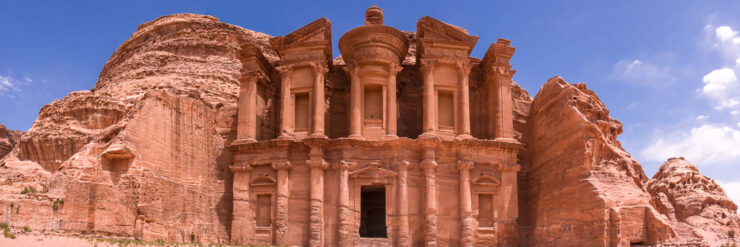
The most iconic image of Petra in Jordan is undoubtedly the Al-Khazneh, or “The Treasury,” a magnificent façade carved directly into the sandstone cliffs. This monumental structure, believed to have been a royal tomb or temple, showcases the incredible craftsmanship of Nabataean builders, blending Hellenistic architectural influences with local artistry. The towering columns, intricate carvings, and grand scale of Al-Khazneh leave visitors in awe, making it one of the most photographed landmarks in the world.
Beyond The Treasury, Petra is home to an extensive network of tombs, temples, amphitheaters, and rock-cut dwellings. The Monastery (Ad Deir), another monumental structure, sits high above the city and offers panoramic views of the surrounding desert landscape. The Siq, a narrow gorge leading to Petra’s main entrance, serves as a dramatic natural gateway, lined with ancient carvings and water channels that once supplied the city.
Petra’s sophisticated water management system, including dams, cisterns, and aqueducts, reflects the ingenuity of the Nabataeans in adapting to the harsh desert environment. These engineering feats are a key focus for archaeological studies in Jordan, providing valuable insights into ancient urban planning and resource management.
Petra’s Global Significance in Archaeology and Tourism
Designated a UNESCO World Heritage Site in 1985, Petra is not only a symbol of Jordan’s ancient history but also a treasure of world archaeology. The city’s unique blend of natural beauty and human innovation has earned it recognition as one of the New Seven Wonders of the World, further cementing its place in global heritage.
For modern visitors, Petra offers a journey through time, allowing them to walk the same paths as ancient traders and kings. As one of Jordan’s most popular tourist destinations, Petra plays a vital role in promoting cultural tourism and preserving the nation’s historical identity.
The ongoing efforts in conservation, excavation, and sustainable tourism ensure that Petra remains a living monument, connecting the present to the ancient world and highlighting the timeless achievements of the Nabataean civilization.