 admin
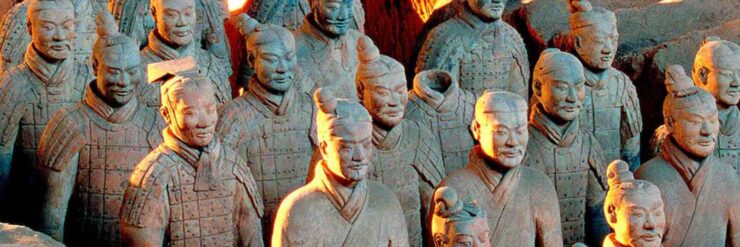
The Terracotta Army was built to accompany Emperor Qin Shi Huang in his mausoleum, serving as his protectors in the afterlife. Spanning an area of over 20,000 square meters, this vast complex includes more than 8,000 life-sized terracotta soldiers, along with horses, chariots, archers, and various non-military figures such as officials, musicians, and acrobats. Each figure is unique, reflecting a high level of craftsmanship and artistry that has amazed archaeologists and researchers alike. The attention to detail, from facial expressions to armor patterns, offers invaluable insights into the Qin Dynasty's military organization and artistic achievements.
The purpose of constructing such a massive funerary project was deeply rooted in ancient Chinese beliefs about the afterlife. Emperor Qin Shi Huang, who unified China in 221 BC, sought immortality and viewed his mausoleum as an eternal palace. The Terracotta Army was designed to mirror his real-life military might, ensuring his supremacy continued beyond death. This project, involving over 700,000 laborers, represents one of the greatest achievements of ancient Chinese engineering and construction.
One of the most remarkable aspects of the Terracotta Army is the technological sophistication involved in its creation. The artisans used a modular production system, assembling different parts such as heads, torsos, and limbs separately before combining them. Despite this assembly-line method, no two figures are identical. Variations in hairstyles, uniforms, and even subtle facial features highlight the diversity within the army. The figures were originally painted in vivid colors, although much of the pigment has faded due to exposure after excavation. Modern conservation efforts aim to preserve these delicate remains of ancient Chinese artistry.
The discovery of the Terracotta Army has significantly contributed to our understanding of Qin Dynasty history and imperial ambitions. Historical records, particularly the ancient Chinese chronicle "Records of the Grand Historian," mention the emperor's tomb, but the scale of the Terracotta Army was unexpected. The find confirmed the extent of Qin Shi Huang's efforts to secure his afterlife and demonstrated the centralized power and resources available during his reign. Furthermore, the presence of non-military figures within the mausoleum complex suggests a desire to replicate the emperor’s courtly life eternally.
From an archaeological perspective, the Terracotta Army has provided scholars with a wealth of information on ancient Chinese weaponry, military tactics, and social hierarchy. Weapons found with the soldiers, including bronze swords, spears, and crossbows, exhibit advanced metallurgical techniques, such as chrome plating, which was believed to be a modern invention. These findings highlight the Qin Dynasty's technological prowess and military dominance, factors that played a crucial role in the unification of China.
Beyond academic circles, the Terracotta Army has become a cultural phenomenon and a symbol of China’s rich archaeological heritage. The site attracts millions of visitors each year, boosting tourism and fostering global interest in Chinese history. Exhibitions featuring select Terracotta Warriors have toured internationally, captivating audiences and promoting cross-cultural understanding. The army's iconic status in global popular culture has also influenced media, literature, and art, further cementing its place as a world archaeological wonder.
Preserving the Terracotta Army presents ongoing challenges. The delicate nature of the terracotta figures and their painted surfaces requires meticulous conservation efforts. Environmental factors, such as humidity and air pollution, pose significant threats to the site's preservation. Chinese authorities, in collaboration with international experts, continue to develop advanced conservation technologies to protect this invaluable archaeological site for future generations. Additionally, ongoing excavations promise to reveal more secrets of the mausoleum complex, as much of the emperor’s tomb remains unexplored.
The Terracotta Army is not only a testament to the grandeur of Emperor Qin Shi Huang's reign but also a reflection of the deep spiritual and cultural values of ancient Chinese civilization. It embodies themes of power, immortality, artistic excellence, and technological innovation. For modern audiences, the Terracotta Army serves as a tangible link to the distant past, offering a window into the world of ancient China and its first imperial dynasty.
In conclusion, the Terracotta Army of Xi'an stands as one of the most significant archaeological discoveries in the world. Its historical importance, artistic beauty, and cultural symbolism continue to inspire awe and scholarly research. As one of the most visited heritage sites globally, it plays a crucial role in preserving and promoting China’s ancient history and cultural legacy. For anyone interested in archaeology, ancient Chinese history, or world heritage, the Terracotta Army remains an unmissable marvel of human achievement.