
 admin
The Lascaux Cave Paintings, located in the Dordogne region of southwestern France, are among the most famous and significant examples of prehistoric cave art in the world. Discovered in 1940 by a group of young boys exploring the countryside, the cave revealed an extraordinary collection of Paleolithic paintings and engravings estimated to be over 17,000 years old. This accidental discovery offered an unprecedented glimpse into the lives, beliefs, and artistic expressions of prehistoric humans during the Upper Paleolithic period.
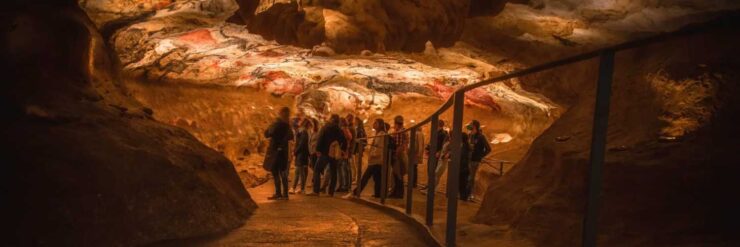
The importance of the Lascaux Cave lies not only in its age but also in the sheer scale, complexity, and artistic quality of its paintings. Often referred to as the “Sistine Chapel of Prehistory,” the cave’s walls are adorned with nearly 600 paintings of animals, including horses, deer, bulls, and bison, as well as hundreds of enigmatic symbols. These artworks provide valuable insights into the spiritual and cultural world of early Homo sapiens in Europe.
The Artistic Significance of Lascaux Cave Paintings in Archaeology
The Lascaux Cave Paintings stand as a testament to the creativity, symbolism, and technical skill of prehistoric artists. Using natural pigments derived from iron oxide, charcoal, and other minerals, the ancient artists employed techniques such as shading, engraving, and perspective to create dynamic, lifelike images. The famous “Hall of the Bulls” is particularly noteworthy, featuring massive depictions of aurochs (wild cattle) that demonstrate a sophisticated understanding of proportion and movement.
Archaeologists and historians regard the Lascaux paintings as a crucial link in understanding the evolution of human symbolic behavior and early artistic traditions. These cave murals are more than mere representations of animals; they are believed to hold spiritual and ritualistic significance, possibly connected to hunting magic or shamanistic practices. The presence of abstract symbols and mysterious signs alongside the animal figures suggests a complex system of prehistoric communication and belief.
Preservation Challenges and Global Impact of Lascaux Cave Paintings
Despite their historical importance, the Lascaux Cave Paintings face significant preservation challenges. Following their discovery, the cave was opened to the public in 1948, but the influx of visitors led to rapid deterioration due to humidity, carbon dioxide, and microbial growth. By 1963, the original cave was closed to protect the delicate artworks. Today, highly accurate replicas, such as Lascaux II, Lascaux III, and Lascaux IV, allow visitors to experience the wonder of these ancient paintings without endangering the original site.
The global impact of the Lascaux Cave Paintings on the field of archaeology and prehistoric art cannot be overstated. They have inspired generations of researchers, artists, and tourists, highlighting the universality of human creativity. As a UNESCO World Heritage Site, Lascaux continues to symbolize the deep connection between humanity’s past and its artistic legacy.
Conclusion: The Enduring Legacy of France’s Prehistoric Art
The Lascaux Cave Paintings remain one of the greatest treasures of archaeological heritage in France and the world. They offer a rare and intimate connection to the minds of our prehistoric ancestors, showcasing their artistic brilliance and cultural depth. As modern preservation techniques evolve, the legacy of Lascaux will continue to inspire awe and curiosity, ensuring that this ancient masterpiece endures for future generations.