 admin
The Discovery of Tutankhamun’s Tomb
The early 20th century saw numerous excavations in the Valley of the Kings, yet most tombs had already been looted. Against all odds, Howard Carter's team stumbled upon a hidden staircase leading to a sealed doorway. On November 4, 1922, Carter made the historic breakthrough. When asked if he could see anything inside, Carter famously replied, "Yes, wonderful things."
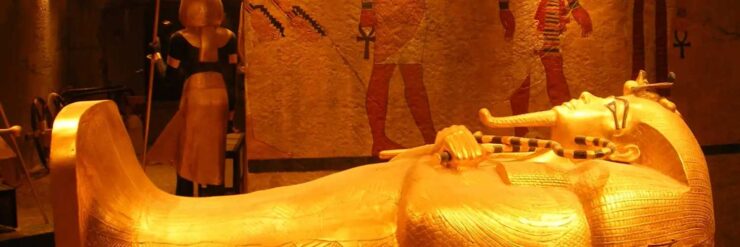
What lay inside was breathtaking: a nearly intact tomb filled with over 5,000 priceless artifacts, golden treasures, and the now-iconic gold funerary mask of Tutankhamun. This discovery became a defining moment in world archaeology.

Who Was King Tutankhamun?
Tutankhamun, often referred to as King Tut, was a pharaoh of the 18th Dynasty of ancient Egypt, reigning from 1332 to 1323 BC. Ascending the throne at just nine years old, his reign was relatively short and considered less significant politically. However, his tomb's discovery catapulted him to global fame, making him the most famous pharaoh today.
Key facts about Tutankhamun:
Ruled during Egypt's New Kingdom period.*
Restored traditional Egyptian polytheism after the Amarna Revolution.
Died at around 18 or 19 years old under mysterious circumstances.
The Treasures of Tutankhamun's Tomb
The tomb, officially cataloged as KV62, was a treasure trove of ancient Egyptian artifacts. Among the most notable finds:
The Curse of the Pharaoh: Myth or Reality?
Soon after the tomb’s opening, rumors of a “curse of the pharaoh” spread as several individuals linked to the excavation died under mysterious circumstances. While modern science attributes these deaths to natural causes or infections, the legend of Tutankhamun's curse added a layer of mystery and captivated the media, making the tomb even more legendary.
The Impact on World Archaeology
Tutankhamun's Tomb is more than a treasure-filled burial site; it marked a turning point in archaeological exploration:
- Boosted global interest in Egyptology.
- Pioneered new archaeological methods for delicate excavation.
- Highlighted the importance of preserving cultural heritage.
- Inspired countless exhibitions worldwide, including the famous "Treasures of Tutankhamun" tour.
Tutankhamun’s Legacy in Modern Times
Today, the Grand Egyptian Museum (GEM) near the Giza Pyramids is set to house Tutankhamun’s complete collection. This will be the largest archaeological museum in the world, ensuring that Tutankhamun’s legacy continues to educate and inspire future generations.
Moreover, Tutankhamun’s image dominates pop culture, appearing in documentaries, films, books, and educational content, symbolizing the grandeur of ancient Egyptian civilization.
Why Tutankhamun’s Tomb Still Captivates the World
Several factors contribute to the tomb's lasting global appeal: